
Foundational Gua Sha Books: A Practical, Honest Review for Students, Practitioners & Lifelong Learners

Introduction: Why Gua Sha Deserves Proper Study
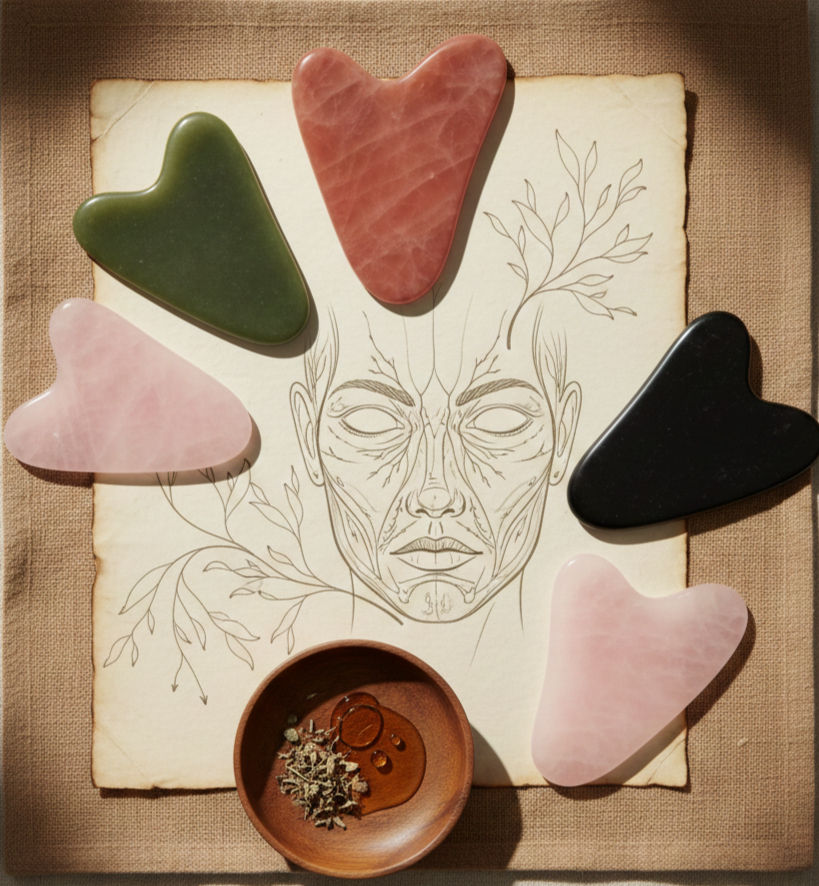
Gua Sha is often reduced today to a beauty trend, a quick social‑media technique, or a single tool sold without context. In reality, Gua Sha is an ancient, versatile healing art with deep roots in Traditional Chinese Medicine, bodywork, fascia science, circulation, and lymphatic movement. Like any powerful hands‑on modality, it deserves to be learned with respect, education, and discernment.
One of the strongest foundations anyone can build with Gua Sha is book‑based learning. Before tools, before advanced techniques, before shortcuts—books give you context, safety, theory, and perspective. They slow the learning process down just enough to help you understand what you’re actually doing.
The seven books below are not random picks. I personally own these books as part of my own collection, and they represent foundational learning resources for anyone serious about understanding Gua Sha—whether you are a curious beginner, a student of bodywork, or a practitioner expanding your skill set.
This blog is written to support both education and conscious choice. You don’t need every book. You need the right book for where you are on your path.

1. The Big “Little” Gua Sha Book – Leta Herman & Jaye McElroy

This book is an excellent entry point into the world of Gua Sha. As the title suggests, it’s approachable without being shallow. It introduces Gua Sha as a living, adaptable practice rather than a rigid or overly technical system.
What makes this book stand out is its tone. It invites curiosity, experimentation, and enjoyment while still honoring the depth of the practice. It doesn’t overwhelm beginners, yet it doesn’t dismiss the intelligence of the reader.
This is a great book for:
Beginners who want to understand Gua Sha without intimidation
Body‑aware individuals exploring self‑care practices
Anyone who appreciates learning through feeling, intuition, and observation
Rather than focusing purely on protocols, it helps the reader connect with Gua Sha as a healing art—something to be learned gradually and respectfully.
2. Gua Sha: A Traditional Technique for Modern Practice – Arya Nielsen

This is one of the most clinically respected modern Gua Sha texts available. Arya Nielsen bridges traditional Chinese medicine with contemporary healthcare environments, making this book especially valuable for practitioners.
The strength of this book lies in its clarity around:
Safety considerations
Clinical applications
Understanding Sha as a diagnostic and therapeutic phenomenon
This book is particularly useful for:
Acupuncturists
Massage therapists
Physical therapists
Healthcare professionals interested in integrative practices
If you want to understand how Gua Sha fits into modern clinical thinking—without stripping it of its traditional roots—this book is essential.
3. Holographic Gua Sha: A Practical Microsystem Handbook – Clive Witham

This book introduces Gua Sha through the lens of microsystems—the idea that the whole body can be reflected and influenced through smaller regions such as the hands, feet, face, and ears.
Clive Witham presents Gua Sha as both a therapeutic and diagnostic tool, helping readers understand how local work can influence systemic patterns.
This book is ideal for:
Advanced learners
Practitioners interested in reflexology‑style systems
Readers curious about pattern recognition in the body
It expands the way you think about Gua Sha, moving beyond scraping techniques into deeper systemic awareness.
4. Gua Sha Scraping Massage Techniques – Wu Zhongchao

This book offers a more traditional Chinese medicine perspective, grounding Gua Sha firmly within classical theory. It emphasizes prevention, circulation, and balance rather than symptom‑chasing.
Readers will appreciate its focus on:
Traditional reasoning
Meridian awareness
Preventive health concepts
This is a strong book for:
Readers interested in classical TCM thinking
Students who want cultural and historical grounding
Those who value prevention over reaction
It pairs well with more modern or clinical texts, providing philosophical balance.
5. Gua Sha: A Guide to Treating People – Clive Witham

This book is clearly written with practitioners in mind. It focuses on applying Gua Sha in real‑world therapeutic settings, including assessment, technique selection, and treatment flow.
What stands out here is the practical orientation:
How to approach different bodies
How to adapt techniques
How to think critically during sessions
This is well‑suited for:
Massage therapists
Bodyworkers
Manual therapy practitioners
It encourages thoughtful, responsive treatment rather than mechanical repetition.
6. Gua Sha: A Complete Self‑Treatment Guide – Clive Witham

This book shifts the focus inward, emphasizing self‑care and personal responsibility. It empowers readers to safely and effectively apply Gua Sha to themselves.
This is particularly valuable because self‑treatment requires a different mindset than treating others—greater sensitivity, awareness, and restraint.
Best for:
Individuals practicing self‑care
People managing chronic tension
Anyone wanting to integrate Gua Sha into daily wellness routines
It reinforces the idea that healing begins with awareness and consistency, not force.
7. Facial Gua Sha: A Step‑by‑Step Guide to a Natural Facelift – Clive Witham

Facial Gua Sha has become popular, but this book reminds readers that it is not merely cosmetic. It addresses circulation, fascia, lymphatic movement, and nervous system regulation.
Rather than selling quick fixes, it emphasizes:
Gentle technique
Anatomical respect
Long‑term tissue health
This book is ideal for:
Facial Gua Sha learners
Estheticians
Anyone interested in natural facial care grounded in anatomy
It pairs especially well with broader body‑based Gua Sha learning.

Closing: Choosing the Right Book (and Tools) for Your Path
Each of these books serves a different purpose. Some are better for beginners, others for practitioners, and others for self‑care or facial work. You do not need all seven to begin—but together they form a complete educational ecosystem.
As you explore these resources, it’s natural to also explore Gua Sha tools. Books teach understanding; tools allow practice.
The key is to choose tools that match your level:
Beginners often benefit from simple, smooth tools with forgiving edges
Practitioners may explore stainless steel or IASTM‑style tools
Facial work requires lighter, anatomically sensitive designs
Learning comes first. Tools come second.
If any of these books resonate with you, I encourage you to explore them further and choose what aligns with your current needs and curiosity. Education builds confidence, safety, and long‑term results.
These books have earned their place as foundational learning resources in my own collection, and I’m confident they can support yours as well.
*This article reflects personal experience, educational perspective, and long‑term study. Always practice responsibly and within your scope of knowledge.
CHECK OUT


Affiliate Disclosure: This post may contain affiliate links. If you choose to make a purchase through one of these links, I may earn a small commission at no extra cost to you. Please know, that I only recommend products that I have personally used, purchased, or truly believe in. Thanks so much for your support!
Comments